Writing · Templates
Wedding venue accessibility wording for guests
Wedding venue accessibility wording should describe the actual route from arrival to the function: drop-off point, steps or ramp, lift access, walking distance, seating and the person who can help. Check every detail with the venue, write a separate note for each function and invite guests to ask privately about anything not covered.
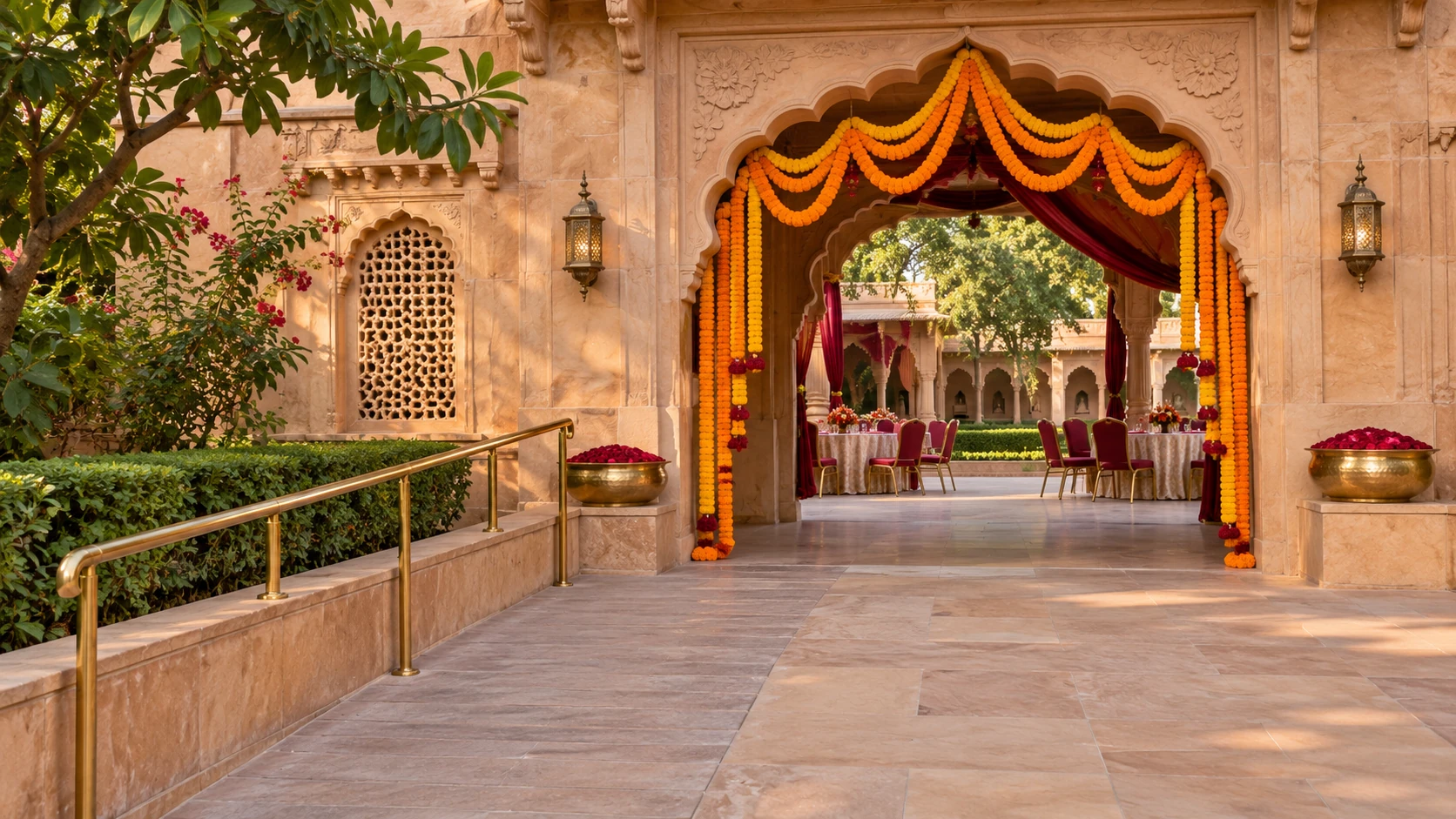
Wedding venue accessibility wording should describe the actual route from arrival to the function: drop-off point, steps or ramp, lift access, walking distance, seating and the person who can help. Check every detail with the venue, write a separate note for each function and invite guests to ask privately about anything not covered.
“Wheelchair accessible” is too broad on its own. A venue may have a ramp at the main entrance but steps between the ceremony lawn and dining room. Another may have a lift that is reached from a different gate. Guests need the route they will use, not a general label.
Which access details should you confirm with the venue?
Walk through the guest journey from the road to the seat. Confirm where a car can stop, whether the route is level, where steps appear and whether a working lift serves every area the function uses. Ask about the distance from parking or drop-off, the surface underfoot, accessible toilets and any seating available while guests wait.
Do not treat a ramp as the complete answer. Its location matters, as does whether the door beside it will be unlocked when guests arrive. If the function moves between spaces, check the whole route: entrance to ceremony, ceremony to meal, and meal back to the pickup point.
Record only what the venue has confirmed. Avoid promises such as “fully accessible” unless the property has supplied and stands behind that description. A specific note about two steps and an alternative entrance is more useful than confident but incomplete reassurance.
What wedding accessibility wording can you copy?
For a venue with a step-free route:
Access for the [function]
Step-free entry is available from [named gate or drop-off] to [function space] via [route or lift]. The distance is approximately [confirmed distance], and seating is available at [location]. For access help on arrival, please contact [name and number].
When the usual entrance has steps:
The main entrance to [venue] has [number] steps. A step-free entrance is available at [precise location]. Please ask your driver to use [gate or drop-off], or contact [name] on [number] before arrival so we can guide you to the correct route.
When arrangements are still being confirmed, do not guess. Use a private invitation to ask:
If you would like to discuss step-free access, seating or another access requirement for [function], please contact [name and number] by [date]. We will check the venue arrangements with you directly.
Replace every bracket and remove any sentence that does not apply.
How should access notes change between wedding functions?
Write one note for each venue and function. A hotel Sangeet may use a lift from the portico, while a ceremony at a heritage property may require a longer route from a side gate. “Access available at all venues” hides those differences.
Vowframes treats every function as its own event with its own venue, timing and invited list. Keep the access note with the event it describes so each guest receives the route for the functions on their invitation. A reception-only guest should not have to compare instructions for another property.
Include the arrival time when assistance or a particular entrance is available only during a set window. If transport is arranged, explain whether its pickup and drop-off points are step-free too. Keep medical details private; the public note should describe the venue, while a named contact can handle an individual conversation.
What should you test before publishing the note?
Ask the venue to read the final wording and confirm every named gate, lift, surface and toilet. Then follow the route in person if possible. Start at the actual vehicle drop-off rather than at the lobby, and check it at the time of day guests will arrive.
Give the note to someone who did not join the venue visit. Ask them where a driver should stop, whether steps are involved, how they reach the function and whom they contact. If any answer depends on an explanation outside the copy, revise it.
Finally, compare the note with the venue map, parking information and day-of contact. All four should point to the same entrance. Remove old access directions when a venue or room changes; two routes labelled as current are not a helpful choice. Clear access information lets guests plan without having to disclose a personal need in a large family chat.