
Writing · Templates
Wedding parking information wording for guests
Wedding parking information should name the function, venue entrance, parking area, arrival route and backup contact. Say whether guests should self-park, use valet service or go first to a drop-off point, but include only confirmed arrangements. Keep each function's instructions separate and place the current version beside its venue details.
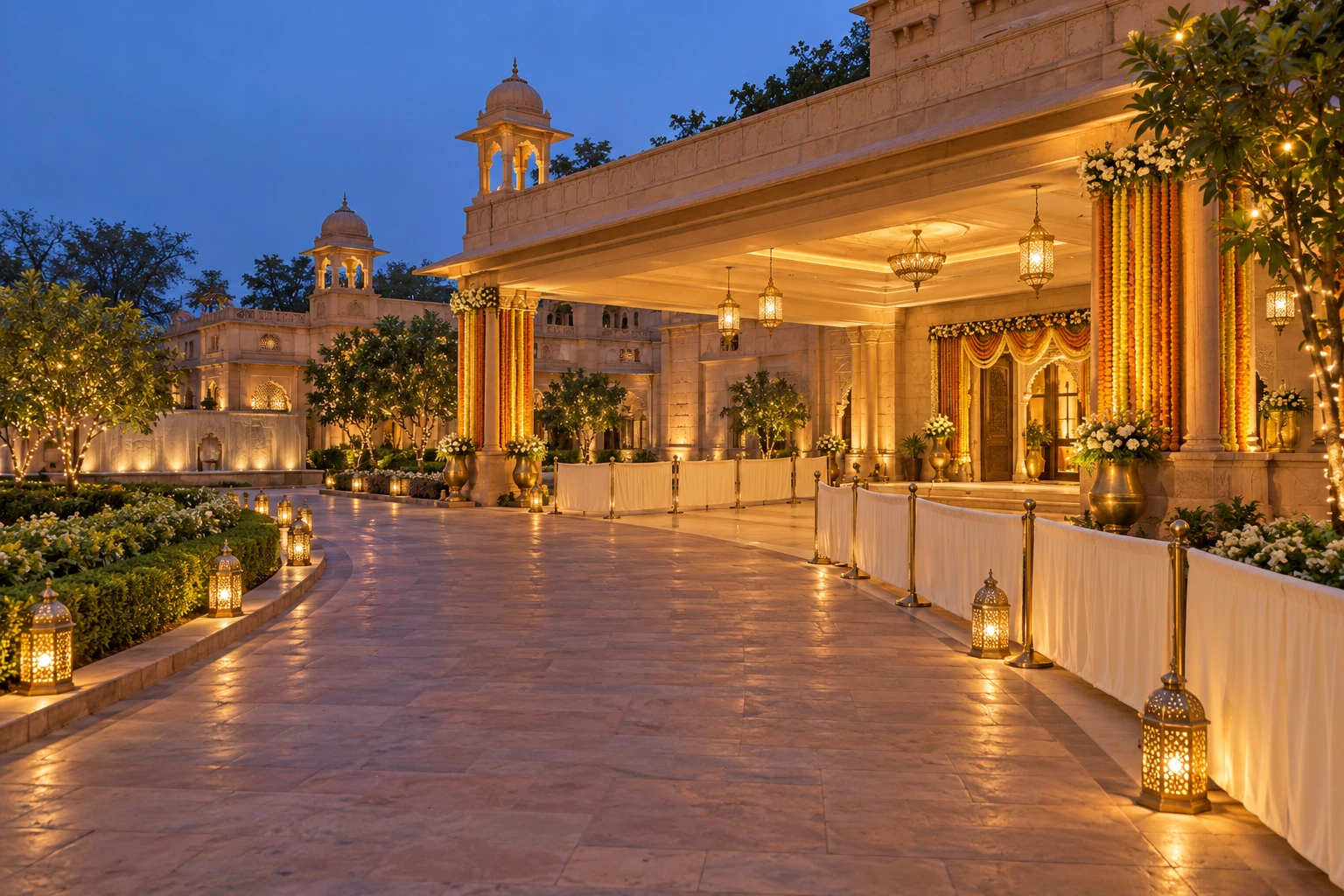
Wedding parking information should name the function, venue entrance, parking area, arrival route and backup contact. Say whether guests should self-park, use valet service or go first to a drop-off point, but include only confirmed arrangements. Keep each function's instructions separate and place the current version beside its venue details.
“Parking is available” is not enough when a property has two gates, a separate banquet entrance and a service road that looks like the main approach after dark. The note should help a guest make the next turn without calling the couple from the car.
Which details prevent a wrong turn?
Map the guest's drive in order before writing: function, full venue name, approach road, gate, passenger drop, vehicle handover or parking bay, and one day-of contact. If the car park is away from the venue, add the connection back to the celebration only after the venue confirms it.
Distinguish the three actions guests often confuse. Drop-off is where passengers leave the vehicle. Self-parking is where the driver leaves it. Valet means handing it to the venue's appointed team. A venue may use more than one, so state which route applies rather than treating the words as interchangeable.
Use a landmark that will still be visible at arrival time: a named gate, hotel portico or banquet entrance. Avoid temporary decorations as the only cue. Flowers may move; an entrance name usually does not.
Which parking wording can you copy?
For self-parking:
Parking for the reception
Please enter [venue] through [gate or road entrance] and use the guest parking area at [location]. From there, follow [confirmed walking or transfer instruction] to [banquet entrance]. For direction help, call [name and number].
For valet service:
Valet parking
Valet service for the [function] will be available at [exact entrance or portico] from [time]. Please drive to the marked drop-off point before proceeding inside. For arrival questions, contact [name and number].
For a separate passenger drop-off:
Drop-off and parking
Please drop passengers at [entrance]. Drivers should then continue to [parking area] via [gate or route]. Allow approximately [confirmed time] to return to the venue, and arrive by [guest arrival time].
Remove any line the venue has not confirmed. A specific but guessed route is worse than a short note telling guests whom to call.
When do different functions need different parking notes?
Write one block per function when venues or arrangements differ. Friday's Sangeet may use a hotel valet desk, while Sunday's ceremony may have self-parking beyond a lawn entrance. “Parking as before” forces guests to search yesterday's messages and fails anyone joining for the first time.
On Vowframes, venue, timing and invited list belong to the individual event. A guest's wedding URL reveals only their invited functions. Keep the parking copy with the event it serves so a reception-only colleague is not sent directions for a private Haldi at another address.
If two functions share a venue, repeat the entrance and arrangement unless you have confirmed they remain unchanged. Different start times can mean a different gate, traffic plan or valet window even at the same property.
How do you road-test the parking note?
Call the venue and read the final copy back. Verify the gate name, access road, parking zone, valet hours and passenger drop. Ask whether another celebration on the property could pull cars towards a different entrance.
Next, start the map route from beyond the property instead of checking the pin while already there. See which gate navigation chooses, whether the final turn is legal and whether the landmark remains visible after sunset. Hand the copy to someone outside the planning group and ask them to trace three moments: the turn off the public road, the passenger exit and the place the driver leaves the car.
Place the approved route beside that function's venue details and delete superseded directions. If the approach changes, revise the wedding website before alerting invited guests through WhatsApp, SMS or email. Point the alert back to the same link instead of forwarding another map screenshot. One live route is easier to trust from the driver's seat than three nearly identical messages.