
Writing · Templates
How to set a wedding RSVP deadline for multiple events
Set a multi-event wedding RSVP deadline before the earliest date any caterer or venue needs a final count. Leave a short family follow-up buffer between the guest deadline and that supplier deadline. Ask guests to confirm every function on their invitation in one response, so each event still gets its own usable headcount.

Set a multi-event wedding RSVP deadline before the earliest date any caterer or venue needs a final count. Leave a short family follow-up buffer between the guest deadline and that supplier deadline. Ask guests to confirm every function on their invitation in one response, so each event still gets its own usable headcount.
The deadline is not simply a date that looks tidy on the invitation. It has to leave enough time to resolve missing replies before the first supplier needs a number. For a wedding with a Thursday Mehendi, Friday Sangeet and Sunday reception, that first operational deadline may belong to the smallest function rather than the final one.
Which deadline should you work backwards from?
Ask every caterer and venue when they need their final attendance number. Write those dates beside the relevant functions, then start with the earliest supplier deadline. That is the constraint your guest deadline must protect.
Do not assume one supplier's date applies to the entire wedding. The Sangeet caterer may need a count before the reception venue does. Vowframes records responses per function, so each supplier can receive a number for the event they are serving rather than one total for the whole celebration.
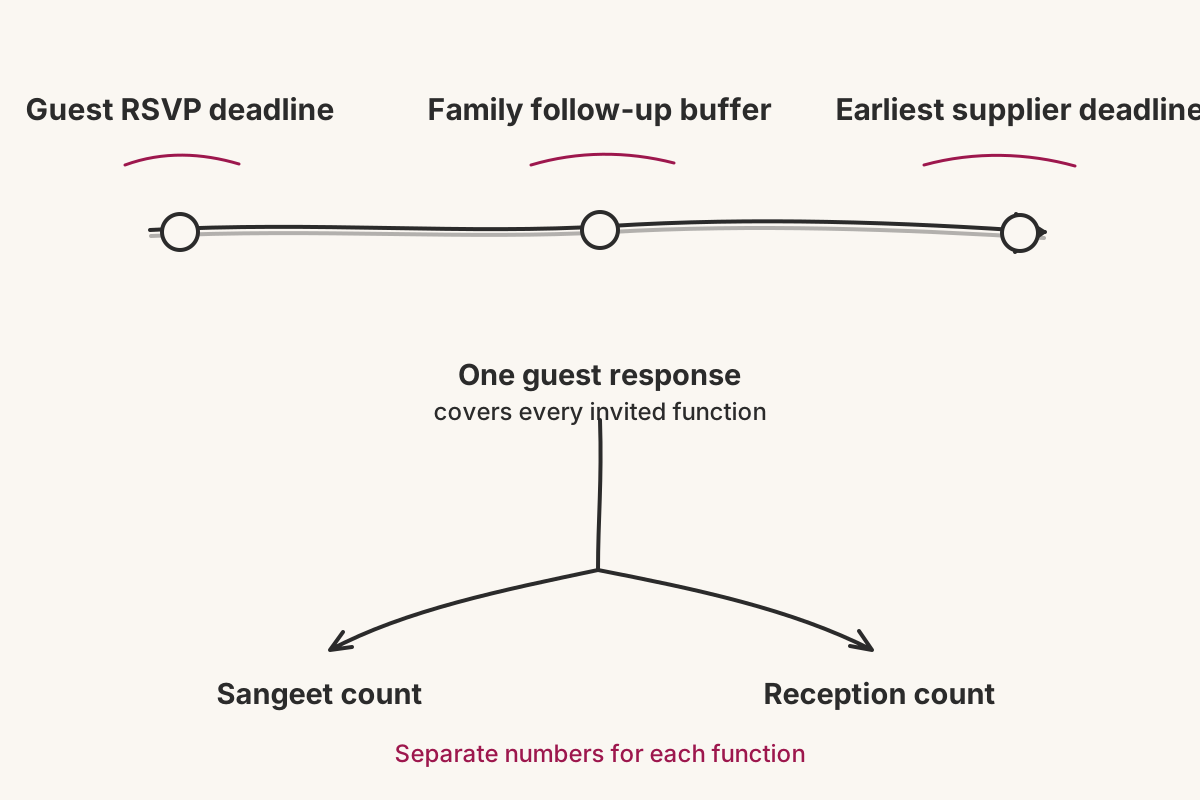
Your sequence should read: Guest RSVP deadline, Family follow-up buffer, Earliest supplier deadline. The buffer is the time for checking unanswered invitations, clarifying a household response and sending the final numbers onward. Choose its length from the actual list you expect to review, not from a universal rule.
Should every wedding function have a different RSVP date?
Usually, one clearly stated response date is easier for guests to act on. Set it early enough to protect the first supplier deadline, even if the reception count is due later. A single date avoids asking someone invited across three days to remember three cutoffs.
One deadline does not mean one combined answer. A guest may attend the Sangeet and reception but decline the ceremony. With Vowframes, the guest answers once in one flow for all the events on their invitation, while the responses remain recorded per function. That gives the family separate event counts without sending the guest through separate forms.
Use different deadlines only when there is a genuine operational reason, such as one function being confirmed much later. If you do, name the function beside each date. Never leave guests to guess whether “RSVP by Friday” covers the whole wedding or one evening.
What wedding RSVP deadline wording can you copy?
For one deadline across all invited functions:
Please confirm your plans for every function on your invitation by [day, date] using your wedding link. One response covers all your invited events and helps us finalise each function's numbers.
For a deadline tied to an upcoming supplier count:
Please accept or decline each function on your invitation by [day, date]. We will be confirming our first venue and catering numbers shortly afterwards.
For a family invited across several days:
Please let us know who will attend the [Mehendi], [Sangeet], [ceremony] and [reception] by [day, date]. Your answer can be different for each function.
Replace every bracketed field. Keep venue directions, dress notes and transport details on the wedding website rather than packing them into the deadline sentence.
How should you handle guests invited to different events?
Send each person wording that matches their invitation. A reception-only colleague should see a reception response request, not a list of private family functions. A relative attending the full celebration can be asked to confirm every event shown on their link.
Vowframes shows each guest only the functions they are invited to. That makes “confirm every function on your invitation” precise without copying a complete programme into WhatsApp, SMS or email. The wedding link can be shared through any of those channels, while the current event details stay in one place.
Before sending, open contrasting guest links and compare the visible functions with the invitation decisions. The deadline may be correct, but the request is still confusing if a person sees an event that was not meant for them.
What should happen after the RSVP date passes?
On the next review day, compare invited guests with recorded answers function by function. Start with the event tied to the earliest supplier deadline. Follow up only with people whose missing response affects that count, then move to the next function.
Keep the reminder small: name the function, repeat the deadline and provide the same wedding link. Do not paste a fresh schedule into the message. Repeating logistics across chat threads creates competing versions just when the family needs one dependable record.
Once the follow-up buffer closes, give each supplier the count for their function. Keep the Sangeet number separate from the ceremony and reception numbers, even if many guests overlap. The purpose of the deadline is not to collect one impressive total; it is to leave enough time for every venue and caterer to receive the number they can actually use.