
Writing · Templates
Indian wedding RSVP wording for multiple functions
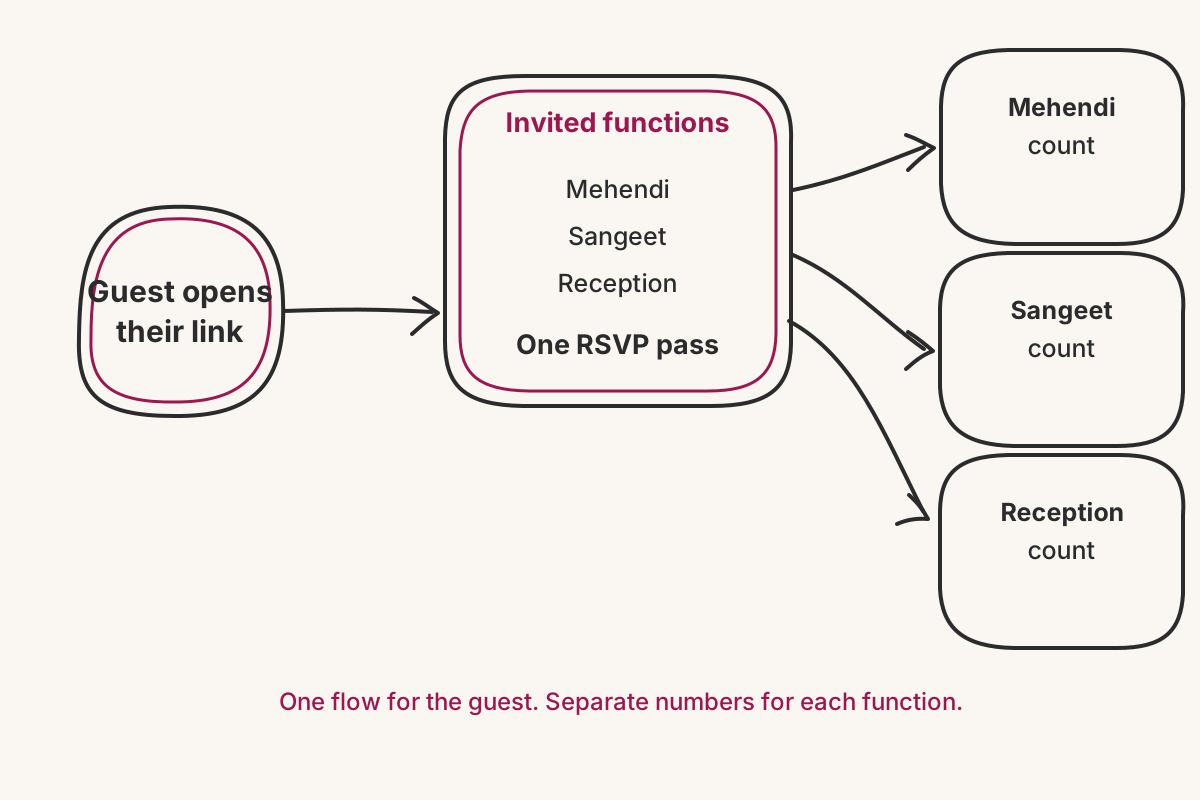
Indian wedding RSVP wording should ask guests to confirm each function on their invitation without making them complete separate forms. Name the event, date and attendance choice clearly, keep household questions specific, and explain that one RSVP flow covers all their invited functions while preserving a separate count for each event.
Indian wedding RSVP wording should ask guests to confirm each function on their invitation without making them complete separate forms. Name the event, date and attendance choice clearly, keep household questions specific, and explain that one RSVP flow covers all their invited functions while preserving a separate count for each event.
The wording has to hold two ideas at once: the guest is responding in one sitting, but their answer may differ across the Mehendi, Sangeet, ceremony and reception. “Will you attend our wedding?” loses that difference before planning has even begun.
What should the RSVP introduction say?
Start by telling the guest exactly what they are confirming. Avoid language that suggests every person received the full wedding programme. A reception-only colleague and a relative attending four days need the same clear instruction, even though the events shown to them differ.
Use this opening:
Please confirm your plans for each function included in your invitation by [date]. You can review all your invited events and submit your responses together below.
For a family response, add one precise line:
Please check the names and attendance for each invited family member before submitting.
Do not call this “one answer for the wedding.” The convenience is one RSVP flow; the useful information is still attendance for each function. Vowframes shows a guest only the events they are invited to, lets them answer once across those events, and records responses per function.
Which wording works for each wedding function?
Keep every event block consistent so guests can scan it quickly. Name the function and date, then ask one direct attendance question.
Mehendi — [day, date] Will you attend the Mehendi? [Yes, I will attend] [No, I cannot attend]
Sangeet — [day, date] Will you attend the Sangeet? [Yes, I will attend] [No, I cannot attend]
Wedding ceremony — [day, date] Will you attend the wedding ceremony? [Yes, I will attend] [No, I cannot attend]
Use the same pattern for the reception or any smaller family function. Do not vary “attend,” “join,” “be present” and “celebrate with us” across four blocks merely for style. Repeated wording helps guests recognise that each event needs a decision.
How should you ask for household attendance?
A household reply needs names or counts tied to the relevant function. Avoid one field labelled “number attending” beneath the entire week; it cannot explain that four family members will attend the reception while two will attend the Sangeet.
Use a prompt beneath each event:
Who from your invited household will attend [function]? Please select each person who is coming.
If you are collecting a count outside a named guest list, write:
How many invited members of your household will attend [function]?
Do not add meal choices, dietary questions or plus-one fields unless your actual setup supports them. Those behaviours are not established for Vowframes. Keep this template focused on the attendance decision the product does support.
What should guests read before they submit?
End with a short review instruction rather than another welcome message:
Please review each function before submitting. Your attendance can be different for each event.
Then test the wording with contrasting invitations. Open one guest view containing several functions and another containing only the reception. The first guest should understand that one submission can contain different answers; the second should never be asked about an event outside their invitation.
Vowframes keeps the guest experience in one flow while storing responses per function. That gives the Sangeet and reception separate usable numbers without sending anyone to a separate form for every event.
Before publishing, replace every bracketed field, check that function names and dates match the current schedule, and use the same attendance labels throughout. The wording is ready when a guest can tell what they are invited to, answer each relevant event and submit without asking whether one “yes” applies to the whole wedding.