
Writing · Templates
Indian wedding dress code wording for every function
Indian wedding dress code wording should name the level of formality, give one useful clothing cue and explain any practical reason behind it. Use the examples below for a Haldi, Mehendi, Sangeet, ceremony and reception, then remove every instruction that your hosts do not genuinely need guests to follow.
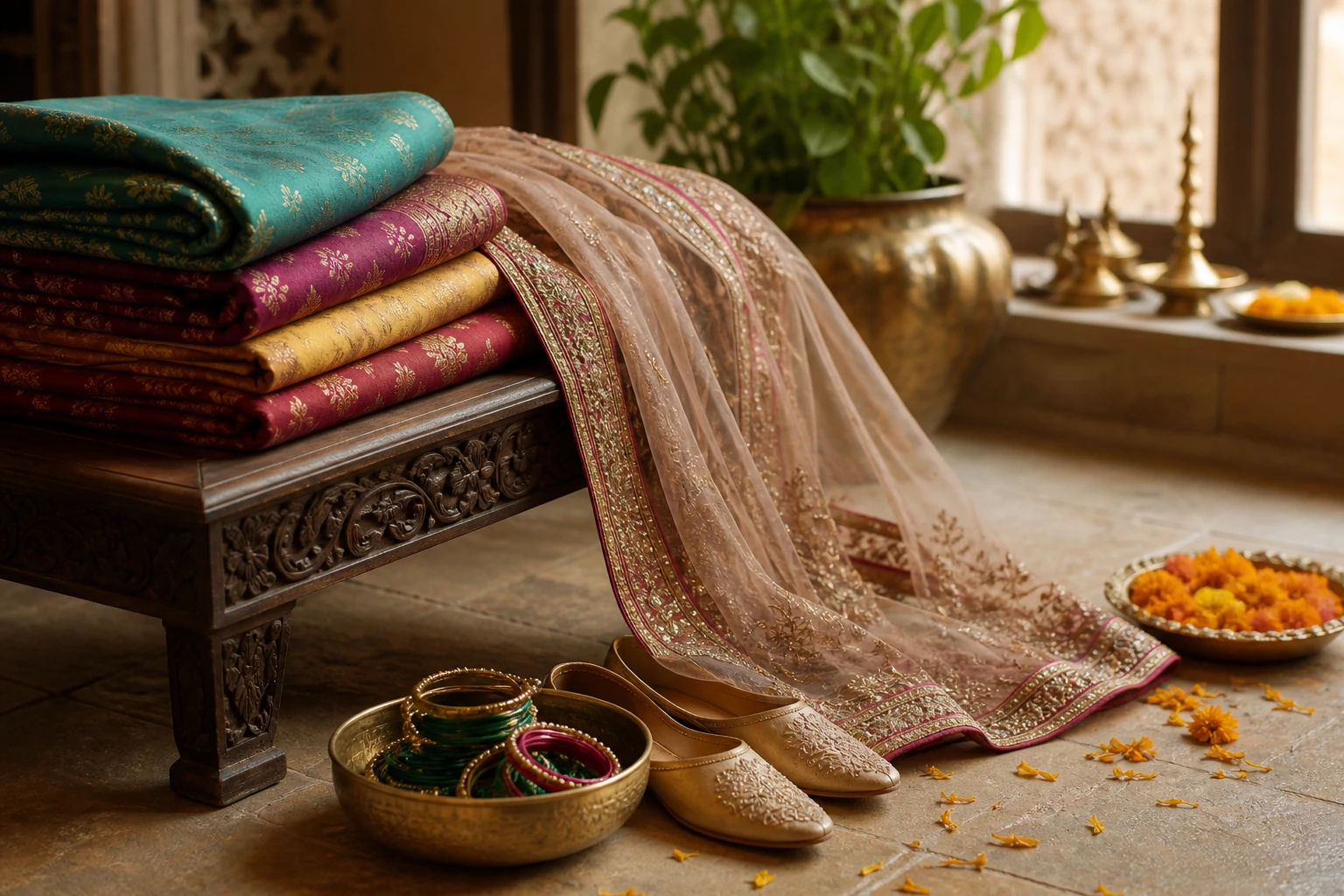
Indian wedding dress code wording should name the level of formality, give one useful clothing cue and explain any practical reason behind it. Use the examples below for a Haldi, Mehendi, Sangeet, ceremony and reception, then remove every instruction that your hosts do not genuinely need guests to follow.
“Festive” can mean something different to every guest. A useful note narrows the decision without turning the invitation into a list of rules. It tells someone whether an outdoor afternoon needs light clothing, whether dancing makes comfortable footwear sensible, or whether a particular colour is part of the function.
What should a wedding dress code note actually tell guests?
Build each note from three parts: the formality, a specific cue and a practical condition. The formality might be relaxed, festive, traditional, cocktail or formal. The cue might be a colour palette or simply “Indian or Western attire welcome.” The condition explains what the venue or programme asks of clothing.
Use this base structure:
Dress code: [level of formality]. [Indian/Western attire guidance, if useful]. [One practical note about colour, weather, footwear or the setting].
Only include a restriction when it matters. If the family has no colour request, do not invent a palette because wedding websites often show one. If the event is on grass, however, saying so can help guests choose shoes before they leave home.
How should you word the Haldi and Mehendi dress codes?
For a Haldi, explain the setting and the likelihood that clothing may meet turmeric rather than relying on a vague yellow theme:
Haldi — relaxed festive attire. Bright colours are welcome. This is an outdoor function, and turmeric may find its way onto clothing, so please choose something comfortable that you will not mind marking.
If the family does want one colour:
Haldi — relaxed Indian attire in shades of [colour]. The function will be held [indoors/outdoors]; light fabrics and comfortable footwear are recommended.
For a Mehendi, tell guests whether they need free hands or expect a long seated afternoon:
Mehendi — colourful daytime festive wear. Indian or Western attire is welcome. Choose sleeves and jewellery that will be comfortable while having Mehendi applied.
Do not promise artists or an activity in the dress note unless those arrangements are confirmed. Clothing guidance should not quietly become programme information.
What wording works for a Sangeet or cocktail evening?
A Sangeet note should help with formality and movement:
Sangeet — festive evening wear. Indian or Western attire is welcome. There will be dancing, so bring or wear footwear you can stay comfortable in through the evening.
For a more formal evening:
Sangeet — formal Indian or cocktail attire. We would love guests to wear [optional palette]. The celebration is indoors, with dinner following the performances.
If performances begin at a fixed time, place that timing with the event schedule rather than hiding it inside the clothing note. The dress code should answer “What should I wear?” while the itinerary answers “When should I arrive?”
How do you guide guests for the ceremony and reception?
Ceremony wording should reflect the venue and any custom that changes what a guest brings or wears:
Wedding ceremony — traditional or formal Indian attire. The ceremony is [indoors/outdoors]. Please choose [weather-appropriate clothing / footwear suitable for the lawn], and bring [a shawl or other genuinely needed item] if useful.
For the reception:
Reception — formal evening wear. Indian and Western attire are both welcome. [Optional one-line colour guidance or venue condition.]
Avoid unexplained bans. If guests should not wear a colour, state the request calmly and only when the family has agreed it. “We kindly ask guests to leave [colour] for the couple” is clearer than a long list of prohibited shades.
Where should dress code wording live on the wedding website?
Put each note beside the function it belongs to, not in one general paragraph for the whole wedding. A garden Haldi and a ballroom reception ask different things of a guest, even when they happen on consecutive days.
Vowframes treats every function as its own event with its own venue, timing and invited list. The same wedding link shows a guest only the functions they are invited to. Keeping attire guidance with the relevant event means a reception-only colleague does not have to sort through a Mehendi palette, while a relative attending all week can prepare function by function.
Before sharing, read every note as a request rather than a mood board. Remove placeholders, check that colours match the family’s final decision and confirm that venue conditions are current. Then ask one guest outside the planning group what they would wear based on the wording alone. If their answer fits the function without needing another WhatsApp message, the note is doing its job.